February 12, 2025, by Robert King—
As the transition takes place with the return of Trump and the arrival of Rubio as the new secretary of state, one of the key questions regarding policy toward North Korea is whether the United States will continue to advocate for human rights and remain a participant in the UN Human Rights Council, which has been the central UN body focused on North Korea’s human rights atrocities, as well as human rights abuses in a number of other UN member countries.
October 18, 2024, by Robert King—
On October 18, 2004, President George W. Bush signed into law the North Korean Human Rights Act. The president’s statement, issued on his signing of the law, said the legislation “provides us with useful new tools to address the deplorable human rights situation in North Korea by focusing our efforts to help both those who flee the regime and those who are trapped inside the country.” The statement emphasized that the legislation was bipartisan and reflected “our unified concern for and commitment to the welfare of the North Korean people.” The legislation that became law specified that promoting human rights for North Korea should be “a key element in future negotiations between the United States, North Korea, and other concerned parties.”
October 15, 2021, by Robert King—
The most striking feature of the data for North Korea in both the overall number of work-related deaths and in the number who suffered death from stroke as a result of overwork is that the number went from one of the worst in the world to decisively the worst of all UN member states. In almost every other country in the world over the period of this study, the death rate from workplace disease and injury declined.
September 10, 2021, by Robert King—
Despite statements from Secretary of State Antony Blinken that a North Korean human rights envoy will be appointed, there are several complications that could delay that appointment... In June 2018, the United States Congress adopted legislation extending (“reauthorizing”) the North Korea Human…
August 3, 2021, by Robert King—
The demonstrations in Cuba are not just a time for North Korea to demonstrate solidarity. There is a good possibility that these events are a concern to some North Korea’s leaders because what happened in Cuba might also happen in their own country.
February 12, 2021, by Robert King—
The United States’ re-entry into the United Nations Human Rights Council signals a much-needed U.S. commitment to protecting human rights everywhere and gives credibility to a key force fighting North Korea’s human rights violations, says Ambassador Robert King.
January 27, 2021, by Robert King—
The number of North Korean defectors (refugees) resettling in South Korea has dropped to the lowest level in two decades. The South Korean Unification Ministry reported that during the entire year of 2020, only 229 North Koreans sought admission and were resettled in the South. Amb. Robert King explains why.
December 22, 2020, by Robert King—
The South Korean National Assembly last week approved legislation that imposes stiff fines and jail terms for sending leaflets, USB sticks, Bible verses, and even money across the 38th parallel into North Korea via balloons. The real risk for the Moon government is that by responding so quickly to the derisive dressing down from Kim Yo-jong, it may give Seoul the appearance of being overly eager to accede to Pyongyang’s demands. Such a response weakens South Korea’s ability to negotiate with the North. The quick capitulation by the South only encourages Pyongyang to take a tougher stance in the future.
December 15, 2020, by Robert King—
The incoming Biden administration is now just weeks away from assuming the reins of political power in Washington. The new administration has no shortage of gratuitous advice about policies and programs it ought to pursue. Unrequested, I am offering my advice about what ought to be on the agenda for dealing with North Korean human rights in the new administration. One issue that has largely been ignored for the last two and a half years of President Trump’s White House stewardship is human rights in North Korea. In light of that neglect, I offer thoughts on the North Korea human rights agenda for the new administration.
February 26, 2020, by Robert King—
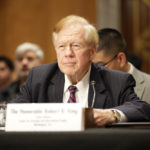
Human Rights is a critical part of U.S. policy toward North Korea. Ambassador King testified before the U.S. Senate Foreign Relations Subcommittee on East Asia, the Pacific and International Cybersecurity Policy on the state of North Korea policy one year after the U.S.-North Korea summit in Hanoi.