November 22, 2017, by Marie DuMond—
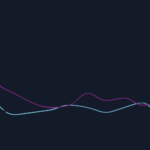
On November 22, predictive signals by Predata/CSIS Beyond Parallel indicate there is an elevated likelihood of a North Korean WMD activity in the next 14 to 30 day windows. The likelihood of WMD activity in the coming weeks is tempered by the fact that, historically, North Korea has not conducted many tests in the November and December timeframe.
November 13, 2017, by Marie DuMond—
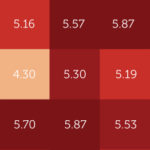
Beyond Parallel’s first-ever survey of expert assessments on unification-related issues indicate South Korea and the United States share the common view that domestic stabilization and unification costs constitute the most critical unification blind spots with a high degree of concern but low levels of knowledge for both countries.
November 6, 2017, by Joseph S. Bermudez Jr. and Lisa Collins—
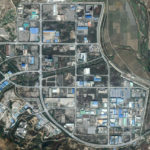
In October, it was reported that North Korea was secretly operating factories inside the Kaesong Industrial Complex without notifying the South Korean government. Satellite imagery shows that while there may be some token industrial activity occurring, the complex is not operational in any real sense of the term.
November 3, 2017, by Lisa Collins and Sang Jun Lee—
Predictive analytics by PreData/CSIS Beyond Parallel for missile tests and WMD activity indicate that the underlying signals for both the 14-day prediction level has been trending downward since October 24, 2017... PreData/CSIS Beyond Parallel predictive analytics for North Korean missile tests and WMD activity indicate that…
October 18, 2017, by Marie DuMond—
Domestic stabilization is the most critical issue with unification for South Korean officials and experts, registering the highest composite score (i.e., high level of concern and low level of knowledge). This means civil-military relations, law and order, and stability in the North represent the issues for which Koreans see great consequences for national interests, but for which they have little prior knowledge or understanding. Hence, it is the greatest potential “blind spot” of unification. Costs related to unification rank a close second for South Koreans, followed by refugees, nuclear weapons, and human rights.
October 2, 2017—
Negotiations over North Korea’s nuclear program have occurred for more than 25 years. This database explores the entire record of nuclear diplomacy between North Korea and the United States from 1990 to 2017... Negotiations over North Korea’s nuclear program have occurred for more than 25 years. There are…
October 2, 2017—
The debate over how to deal with North Korea’s nuclear program has been raging for nearly 25 years. In this study, CSIS Beyond Parallel collected information on negotiations between the U.S. and North Korea to shed light on the present nuclear dilemma.
September 22, 2017, by Marie DuMond—
Predata-Beyond Parallel signals indicate there is a significantly elevated chance of North Korea conducting a missile test in the next 30-days and an elevated likelihood of North Korea conducting a missile test in the next 14-days... [footer] Elevated chance of a North Korean missile test in the next 14 days.…
September 7, 2017, by Marie DuMond—
On September 7, predictive signals by Predata/CSIS Beyond Parallel indicate there is a significantly elevated chance of a North Korean missile test in the next 14 days. The underlying signal has been breaching its highest levels each day since August 31, reaching its highest level in 102 days on September 5 and exceeding its 30-day trailing average by 2.5 standard deviations. The signal continued to show significant overnight increases through September 6.
September 6, 2017—
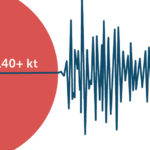
North Korea conducted its sixth nuclear test on September 3, 2017. North Korean state media announced that the test was of a hydrogen bomb that could fit on the top of an intercontinental ballistic missile (ICBM)... On September 3, North Korea conducted its sixth nuclear test. North Korean state media announced…