April 27, 2018, by Victor Cha—
The inter-Korean summit is an integral piece in a network of summits and high-level diplomacy springing up across the region. The summit between the two Koreas is another positive step in diplomacy that keeps the situation around the Korean peninsula peaceful, moving away from last year’s atmosphere of crisis.
April 23, 2018—
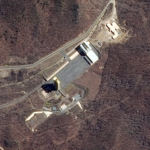
On Saturday April 21, commercial satellite imagery from the Sohae Satellite Launching Station indicates minimal to no activity ahead of the inter-Korean summit. While dwindled ground activity could be attributed to the fact that images were taken during a weekend, the absence of any parked vehicular traffic and human activity suggests compliance with the leadership’s declaration, coming out of the Third Plenary of the Central Committee of the Workers' Party.
April 23, 2018, by Joseph S. Bermudez Jr. and Beyond Parallel—
Despite being the subject of intense study for almost 60 years there is remarkably little independently verifiable information concerning the development of North Korea’s nuclear infrastructure available at the unclassified level. This series of reports entitled "Yongbyon Declassified," tries to rectify that by examining high-resolution satellite imagery acquired by early U.S. reconnaissance programs.
March 28, 2018, by Victor Cha and Sue Mi Terry—
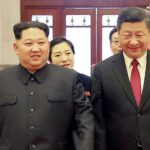
On March 25-28, North Korean leader Kim Jong-un traveled with his wife Ri Sol-ju to Beijing to meet Chinese president Xi Jinping. This was Kim Jong-un’s first foreign visit as the head of state and his first visit to China since becoming North Korea’s supreme leader in December 2011.
March 7, 2018, by Victor Cha and Gordon LaForge—
According to Predata analytics, Korean internet users showed relative indifference toward the high level inter-Korean exchanges this week. Instead, they appeared to care more about upcoming talks with the Americans. All sides would be well-served to know that public attention to this issue, despite other newsbreaking events around the peninsula these days, is focused and significant.
March 5, 2018, by Joseph S. Bermudez Jr. and Beyond Parallel—
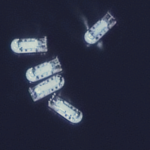
North Korean special forces are a critical component of the Korean People's Army. Within the Korean People's Army Naval Force, unique sniper brigades exist to carry out specialized missions focused on sabotage and subversion of command and control facilities, reconnaissance, infiltration, and amphibious landings and assaults. As part of a four-part series, this final report provides more details about the development, organization, deployment, and training of North Korean hovercraft units which form part of the KPN sniper brigades.
March 2, 2018, by Victor Cha and Marie DuMond—
Reports of ubiquitous celebrations of nuclear weapons accomplishments stand in stark contrast with a new micro-survey commissioned by Beyond Parallel of North Korean citizens. Conducted throughout the summer and fall of 2017 with a cross-section of North Korean citizens, the vast majority of North Korean respondents did not have a positive attitude toward their country’s nuclear weapons program.
February 15, 2018, by Joseph S. Bermudez Jr. and Beyond Parallel—
Key among North Korea’s military capabilities are its special operations forces. Embedded within North Korea's special operations forces are two unique navy “sniper” brigades that are subordinate to the Korean People’s Navy. Hovercraft units that operate as part of these brigades have been trained to carry out a more specialized task—amphibious assault landings and infiltration missions.
February 8, 2018, by Victor Cha and Marie DuMond—
A study commissioned by Beyond Parallel of North Koreans currently living inside the country found that 34 of 36 of respondents, or 94.4%, felt that unification is necessary. The majority of respondents, 44.1%, cited the shared ethnicity between North and South Korean’s as the main reason unification should occur.
February 5, 2018, by Joseph S. Bermudez Jr. and Beyond Parallel—
Satellite imagery analysis shows that North Korea continues to develop its conventional military forces in targeted areas. Construction on a new hovercraft base near Yonbong-ni could indicate a significant escalation of the navy sniper brigade threat to the ROK islands in the West Sea and ports along the coast.