May 22, 2018, by Joseph S. Bermudez Jr., Victor Cha and Marie DuMond—
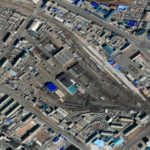
Chongjin Railway Factory is one of three major railway manufacturing facilities in North Korea's eastern corridor. Analysis of this facility can be a brick-and-mortar sign-post of foundational infrastructure progress if the trust-building project of reconnecting the Koreas' railways is carried out.
May 21, 2018, by Seong-whun Cheon—
The absence of specifics on the nuclear issue in the Panmunjeom Declaration means that the inter-Korean summit has passed the nuclear buck on to the U.S.-DPRK summit. In particular, by introducing measures for promoting bilateral relations that are contingent on satisfactorily addressing the nuclear issue, the Panmunjom Declaration makes settling the nuclear issue a precondition for improving inter-Korean relations.
May 16, 2018, by Robert King—
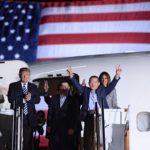
The recent return of three detainees from North Korea and the way in which they were welcomed back from Pyongyang, has a number of unique features that suggest significant changes by the Trump Administration from procedures that have been followed by previous administration over the previous decade. Releasing American citizens, who were detained for spurious reasons in the first place, might better be handled with less fanfare to discourage attempts to exploit future incidents.
April 27, 2018, by Victor Cha—
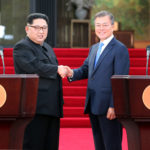
The inter-Korean summit is an integral piece in a network of summits and high-level diplomacy springing up across the region. The summit between the two Koreas is another positive step in diplomacy that keeps the situation around the Korean peninsula peaceful, moving away from last year’s atmosphere of crisis.
March 28, 2018, by Victor Cha and Sue Mi Terry—
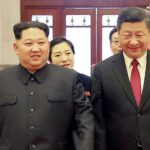
On March 25-28, North Korean leader Kim Jong-un traveled with his wife Ri Sol-ju to Beijing to meet Chinese president Xi Jinping. This was Kim Jong-un’s first foreign visit as the head of state and his first visit to China since becoming North Korea’s supreme leader in December 2011.
March 7, 2018, by Victor Cha and Gordon LaForge—
According to Predata analytics, Korean internet users showed relative indifference toward the high level inter-Korean exchanges this week. Instead, they appeared to care more about upcoming talks with the Americans. All sides would be well-served to know that public attention to this issue, despite other newsbreaking events around the peninsula these days, is focused and significant.
March 2, 2018, by Victor Cha and Marie DuMond—
Reports of ubiquitous celebrations of nuclear weapons accomplishments stand in stark contrast with a new micro-survey commissioned by Beyond Parallel of North Korean citizens. Conducted throughout the summer and fall of 2017 with a cross-section of North Korean citizens, the vast majority of North Korean respondents did not have a positive attitude toward their country’s nuclear weapons program.
February 8, 2018, by Victor Cha and Marie DuMond—
A study commissioned by Beyond Parallel of North Koreans currently living inside the country found that 34 of 36 of respondents, or 94.4%, felt that unification is necessary. The majority of respondents, 44.1%, cited the shared ethnicity between North and South Korean’s as the main reason unification should occur.
December 5, 2017, by Joseph S. Bermudez Jr. and Lisa Collins—
On November 24, 2017, Chinese Foreign Ministry spokesperson Geng Shuang told reporters that the Sino-North Korean Friendship Bridge will be closed temporarily in the “near future” for repairs. A detailed analysis of DigitalGlobe satellite imagery from November 24th shows no activity on the bridge—repair or otherwise.
December 4, 2017, by Marie DuMond—
South Korea and the United States generally share similar estimations of China’s and Japan’s blind spots in a unification scenario. Both believe that Beijing has the most prominent blind spot on domestic stabilization and refugees, and that Japan shares similar concerns, suggesting that all four powers could prioritize law and order in a unification scenario.