February 12, 2025, by Robert King—
As the transition takes place with the return of Trump and the arrival of Rubio as the new secretary of state, one of the key questions regarding policy toward North Korea is whether the United States will continue to advocate for human rights and remain a participant in the UN Human Rights Council, which has been the central UN body focused on North Korea’s human rights atrocities, as well as human rights abuses in a number of other UN member countries.
November 12, 2024—
In this episode, Mr. Sydney Seiler and Secretary General Yongho Tae discuss the latest developments in North Korea. Topics will include updates on North Korean human rights issues, South Korea's policy toward North Korea, and the current situation in North Korea.
October 18, 2024, by Robert King—
On October 18, 2004, President George W. Bush signed into law the North Korean Human Rights Act. The president’s statement, issued on his signing of the law, said the legislation “provides us with useful new tools to address the deplorable human rights situation in North Korea by focusing our efforts to help both those who flee the regime and those who are trapped inside the country.” The statement emphasized that the legislation was bipartisan and reflected “our unified concern for and commitment to the welfare of the North Korean people.” The legislation that became law specified that promoting human rights for North Korea should be “a key element in future negotiations between the United States, North Korea, and other concerned parties.”
September 24, 2024, by Victor Cha—
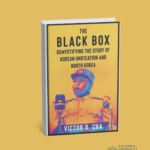
In this groundbreaking book, the leading scholar and practitioner Victor D. Cha shines a light into the “black box” of North Korea and draws critical lessons for the possible reunification of Korea after many decades of division... 2024, Columbia University Press "[The Black Box] calls on privileged insights into North Korea. Peace,…
September 23, 2024—
In this episode, Andrew Schwartz and Victor Cha discuss Dr. Victor Cha's new book, The Black Box: Demystifying the Study of Korean Unification and North Korea... In this episode, Andrew Schwartz and Victor Cha discuss Dr. Victor Cha's new book, The Black…
August 19, 2024—
In this episode, Dr. Victor Cha and Mr. Bruce Klingner discuss recent developments regarding North Korea's missile deployment, successor plan, garbage-filled balloons, and more. .. In this episode, Dr. Victor Cha and Mr. Bruce Klingner discuss recent developments regarding North…
June 30, 2024, by Andy Lim and Victor Cha—
The CSIS Beyond Parallel created an interactive map of North Korea's garbage-filled balloons that crossed over into South Korea in 2024... Since May 28, 2024, North Korea started sending trash-filled balloons into South Korea. Over the course of five months, and in twenty-night waves they have...
June 30, 2024, by Andy Lim and Victor Cha—
Since late May, North Korea has launched thousands of balloons into South Korea filled with trash, marking the return of a long-used tactic of psychological warfare between the two Koreas. Rather than a sign of impending conflict, as some posit, the campaign is a manifestation of Kim Jong-un’s new decoupling policy and a preemption of the new South Korean unification policy focused on the values of freedom and human rights.
January 31, 2024—
In this episode, Dr. Ellen Kim is joined by Dr. Victor Cha to discuss the Korea Chair's latest publication, Slow Boil: What to Expect from the DPRK in 2024, the likelihood of increased North Korean belligerence in 2024 and how it ties to the upcoming U.S. election.
October 15, 2021, by Robert King—
The most striking feature of the data for North Korea in both the overall number of work-related deaths and in the number who suffered death from stroke as a result of overwork is that the number went from one of the worst in the world to decisively the worst of all UN member states. In almost every other country in the world over the period of this study, the death rate from workplace disease and injury declined.