December 24, 2020, by Joseph S. Bermudez Jr., Victor Cha and Dana Kim—
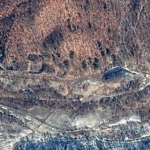
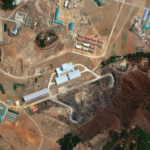
Located approximately 52 kilometers north of the DMZ and 125 kilometers north of Seoul, the Kal-gol missile operating base is one of the most developed of North Korea’s approximately 15-20 undeclared ballistic missile facilities. This base likely houses a reinforced brigade-sized unit equipped with 500-kilometer-range Hwasong-6 (Scud C) short-range ballistic missiles (SRBM) or Hwasong-9 (Scud-ER) medium-range ballistic missiles (MRBM).
November 5, 2020, by Markus V. Garlauskas—
If unchecked, North Korea is increasingly likely to resume strategic weapons testing in the months ahead—including tests of the technologies necessary for its missiles to carry multiple nuclear-capable reentry vehicles (RVs). Such missiles would, at a minimum, increase Pyongyang’s ability to challenge U.S. missile defenses, to make the most of its limited resources for strategic weapons production, and to threaten U.S. targets more credibly despite its limited flight testing of RVs.
October 29, 2020, by Joseph S. Bermudez Jr. and Victor Cha—
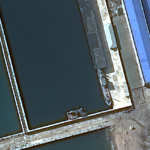
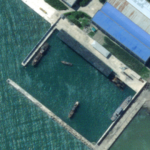
Latest observations of the Sinpo South Shipyard show a return to its status quo of low-level activity. Notable vessels and objects have returned to, or remain at, their usual positions. A satellite image of the Sinpo South Shipyard acquired on October 27, 2020 shows a return to what has become typical activity within the facility’s secure boat basin.
October 5, 2020, by Joseph S. Bermudez Jr. and Victor Cha—
With the upcoming Korean Workers’ Party Foundation Day celebration on October 10, a SLBM test should not be ruled out as a possibility for Kim Jong-un’s self-proclaimed “October surprise.” Such a test would be consistent with Beyond Parallel historical data that shows heightened provocations around U.S. presidential election years.
September 23, 2020, by Victor Cha—
Over the course of 30 elections since 1956, Beyond Parallel measured the period of time before or after an election in which a North Korean provocation happens and found the provocation window has grown more narrow over time. That is, North Korean missile/nuclear tests and other major kinetic provocations have clustered increasingly closer to U.S. elections.
September 9, 2020, by Joseph S. Bermudez Jr.—
An unidentified approximately 12-meter-by-1.75-meter yellow trailer or truck is on the same dock but immediately outside the secure boast basin. Speculation is that this may be a piece of construction equipment (e.g., a crane) or trailer transporting a missile container. We must reiterate that the resolution of the current image precludes positive identification so caution is urged.
September 8, 2020, by Joseph S. Bermudez Jr. and Dana Kim—
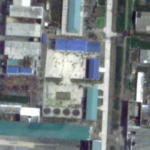
The Hungnam Fertilizer Complex has long been associated with producing chemical feed stocks or agents for North Korea’s nuclear weapons, chemical weapons and ballistic missile programs. Any modernization or improvement in its production capacities warrant close monitoring as they have the potential to support or augment WMD capabilities.
September 4, 2020, by Joseph S. Bermudez Jr. and Victor Cha—
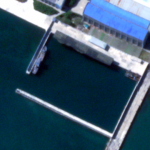
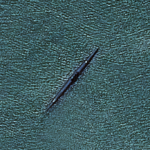
A satellite image of the Sinpo South Shipyard acquired on September 4, 2020 shows some activity within the secure boat basin that is suggestive, but not conclusive, of preparations for an upcoming test of a Pukguksong-3 submarine launched ballistic missile (SLBM) from the submersible test stand barge based here.
May 5, 2020, by Joseph S. Bermudez Jr.—
In a joint baseline analysis with Jane’s Intelligence Review, the Center for Strategic and International Studies surveys a previously undisclosed facility near Pyongyang International Airport in North Korea that is likely related to its expanding ballistic missile development program.
March 30, 2020, by Victor Cha—
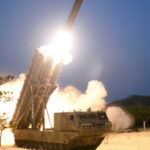
On March 29, 2020 at 6:10 am KST, North Korea launched two projectiles speculated to be short-range ballistic missiles from the Wonsan area in Kangwon province into the sea between Korea and Japan. The missiles traveled a distance of 230 kilometers (143 miles) and reached a peak altitude of 30 kilometers (19 miles). An announcement published in North Korean state media the following day confirmed that the two missiles were launched as part of super-large multiple rocket launcher tests. It also stated the test was carried out by the Academy of Defence Science.