
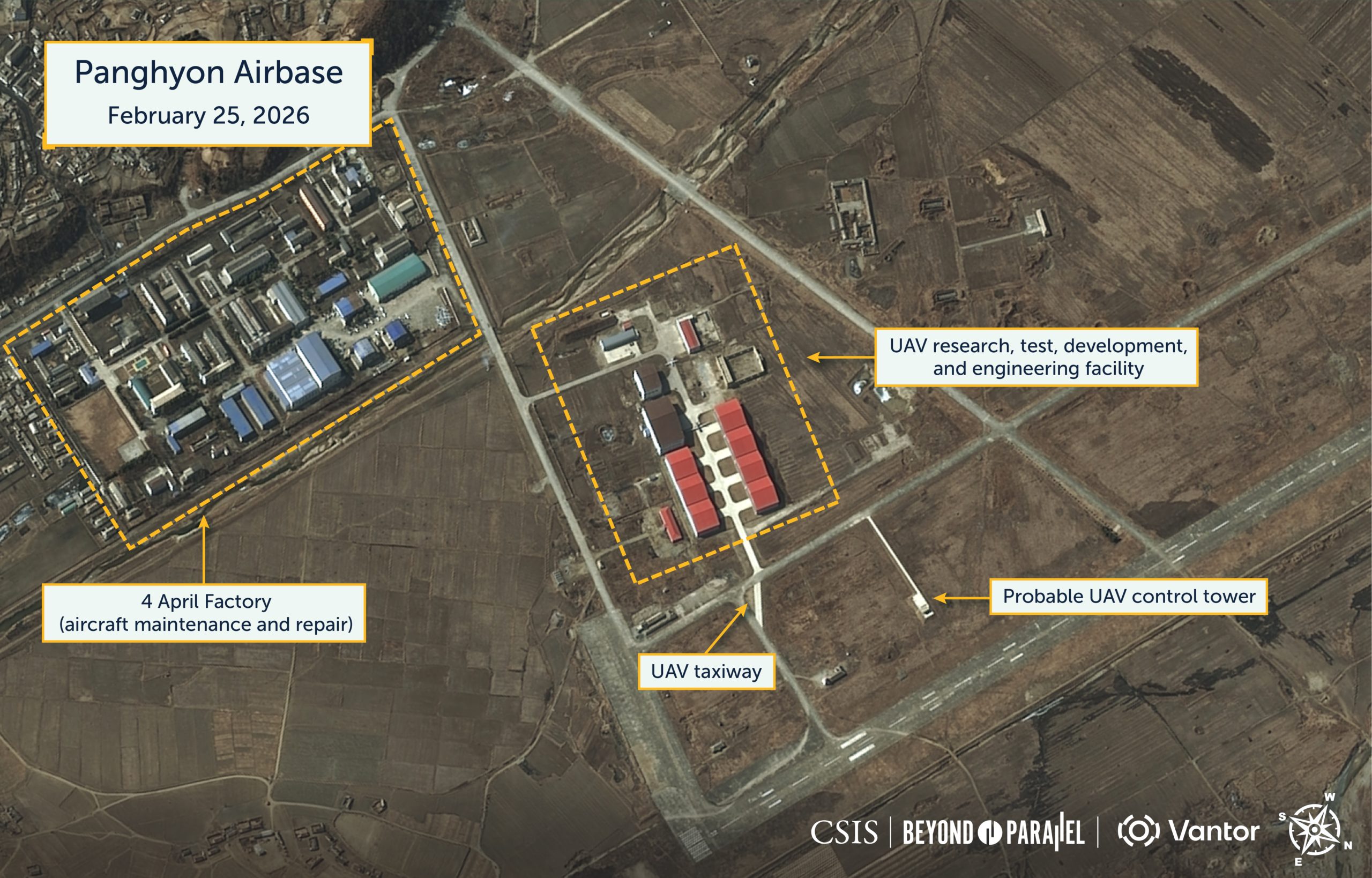

Key Findings
- A February 25, 2026, satellite image shows both a Saebyeol-4 and Saebyeol-9 UAV positioned on the taxiway within the Panghyon Airbase’s UAV research, test, development, and engineering (RTD&E) facility. This is the first time both UAVs have been observed together at the facility.
- While the drones mimic the airframes of U.S. drones such as the RQ-4B Global Hawk and MQ-9A Predator, as noted in our previous report, North Korea drones are presently determined as not carrying advanced equipment similar to that found in U.S. UAVs.
- However, North Korean military forces are gaining invaluable and unprecedented experience during the ongoing war in Ukraine, as both operators and targets of UAV missions and their operational exposure to the Iranian Shahed uncrewed combat aerial vehicles (UCAV) will undoubtedly influence future North Korean UAV development and production.
- Minor changes to the airframes and different weapon loadouts observed over the past two years on both UAVs suggest that, rather than being fully operational systems, they are prototype or pre-production models undergoing routine RTD&E testing.
A satellite image collected on February 25, 2026, provides an up-to-date look at ongoing strategic UAV operations at the Panghyon Airbase. The image shows both a Saebyeol-4 (새별-4) and a Saebyeol-9 (새별-9) UAV positioned on the taxiway of the UAV research, test, development, and engineering (RTD&E) facility. A small number of personnel and equipment are located nearby. This is the first time both UAVs have been observed at the facility simultaneously.
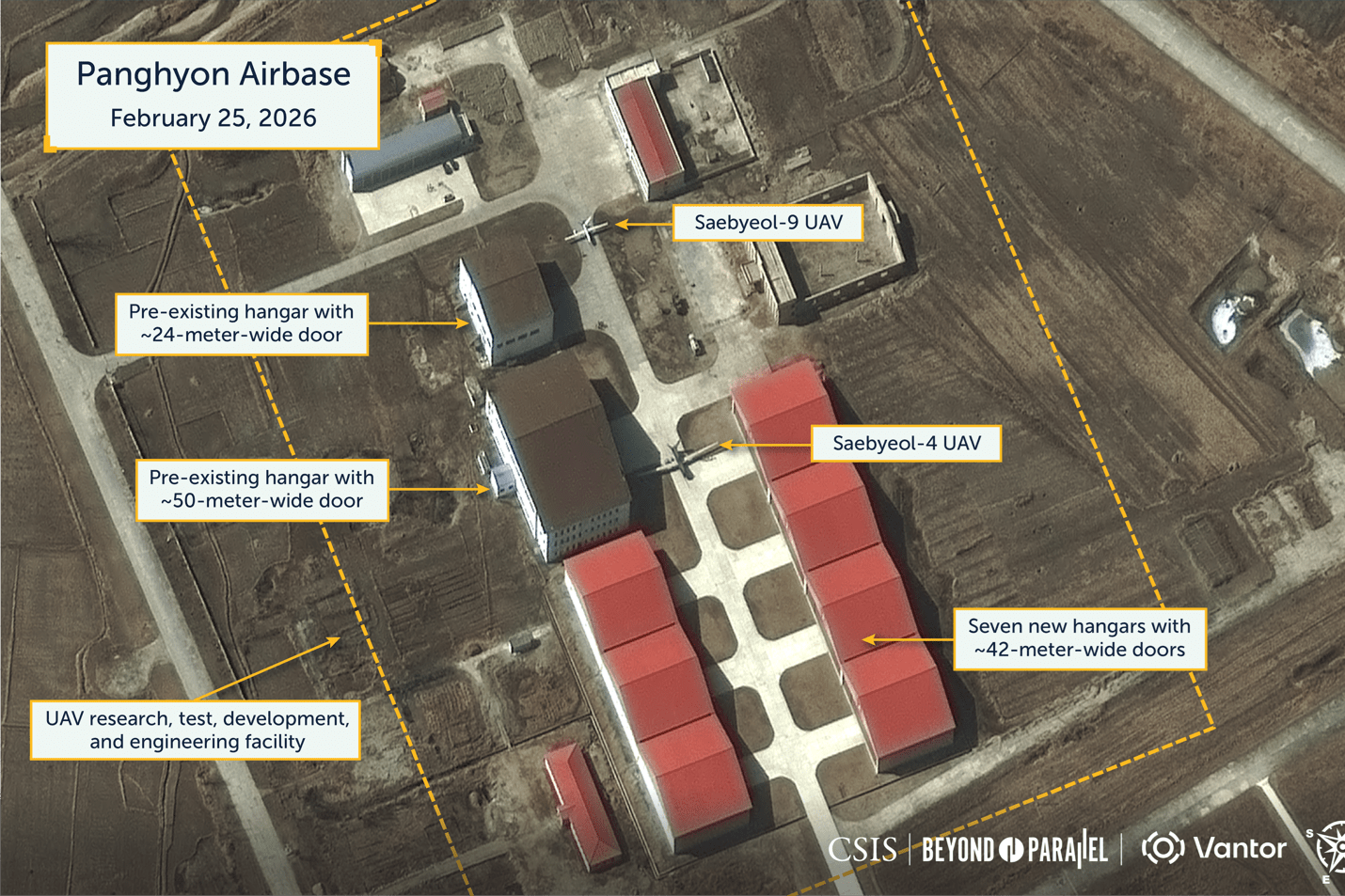

The reason for the presence of both aircraft being out of their hangars and on the facility’s taxiway is unknown. Two potential explanations are:
- Both aircraft are prototype or pre-production models rather than fully operational systems and are continuing to undergo routine RTD&E flight and weapons testing. This may be supported by imagery from the past two years showing minor changes to the airframes and different weapons and weapon loadouts observed on the aircraft during static displays and flying demonstrations.
- It may be related to the closing of the Ninth Congress of the Workers’ Party of Korea (WPK) and to a publicly unannounced flyover of both aircraft.
In the past, only individual examples of either UAV have been observed in satellite imagery of the Panghyon UAV RTD&E facility. This may reflect the fact that they are prototype or pre-production models in the RTD&E phase rather than fully operational systems. As such, the spotted models have undoubtedly undergone numerous design changes and will likely continue to do so.
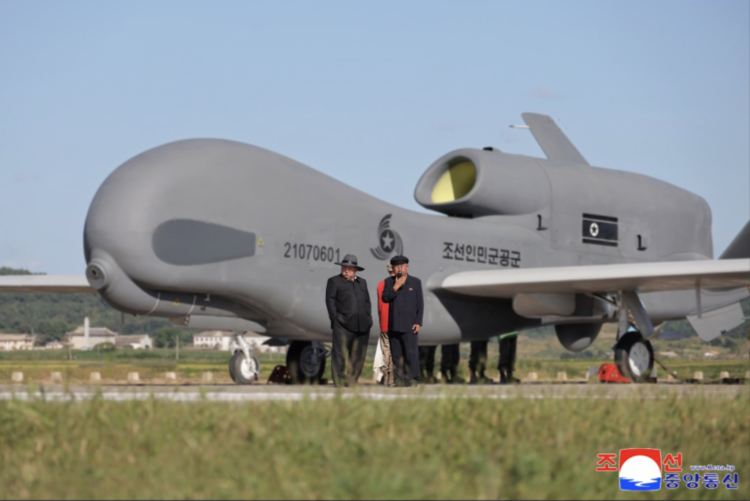
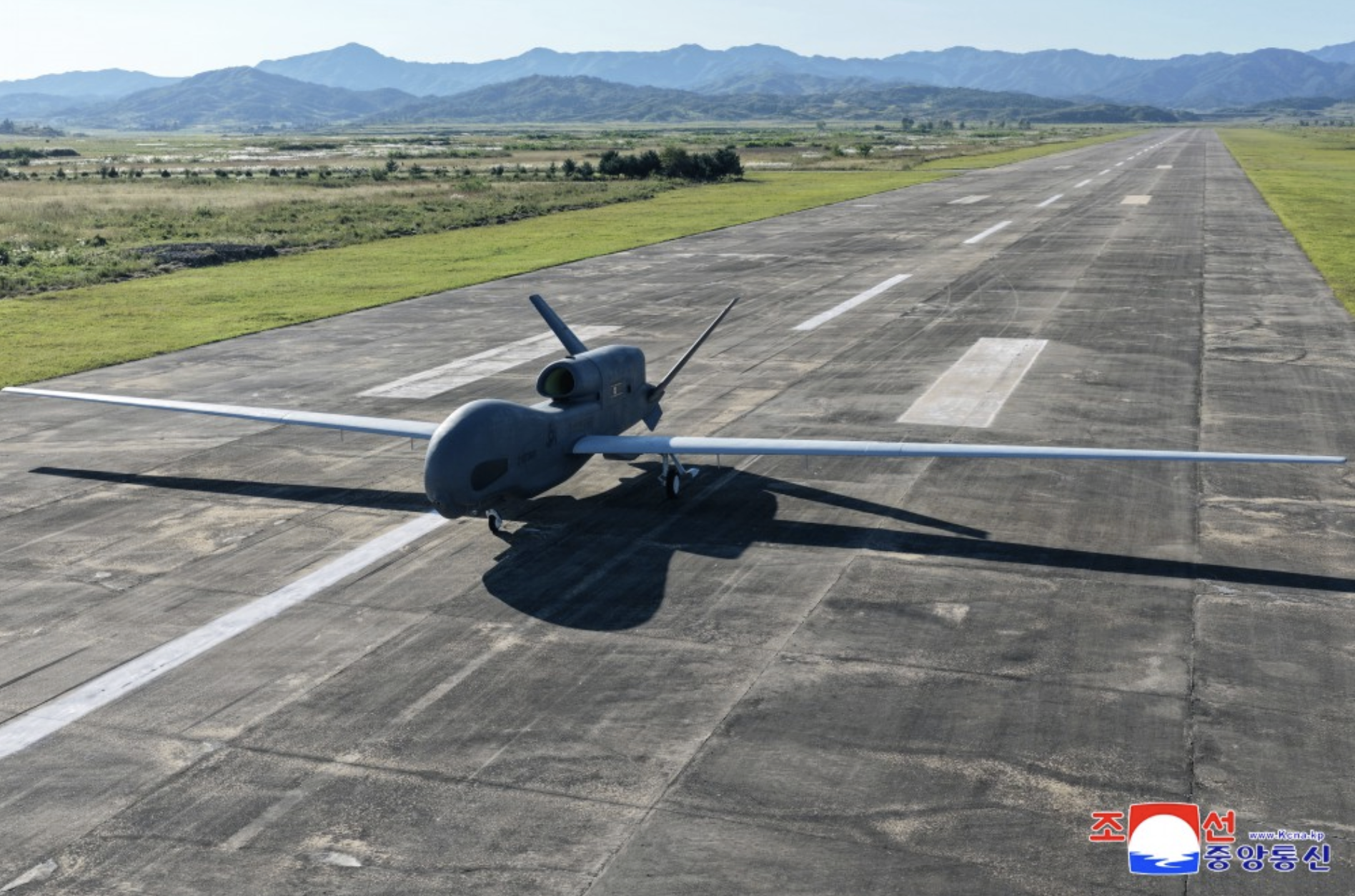
The unprecedented experience being gained by North Korean military forces during the ongoing war in Ukraine, as both operators and targets of UAV missions and their operational exposure to the Iranian Shahed uncrewed combat aerial vehicles (UCAV), will undoubtedly influence future North Korean UAV development and production.1 To what extent, and when these experiences will be incorporated into Saebyeol-4, Saebyeol-9, or other potentially new North Korean UAVs is unclear.
References
- Rapahel Rashid and Luke Harding, “North Korea’s military is being transformed on the battlefields of Ukraine – so why is Seoul silent?” The Guardian, July 23, 2025, https://www.theguardian.com/world/2025/jul/24/north-koreas-military-is-being-transformed-on-the-battlefields-of-ukraine-so-why-is-seoul-silent. ↩