April 8, 2021, by Joseph S. Bermudez Jr. and Victor Cha—
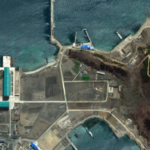
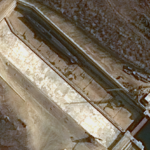
The recent repositioning of the submersible missile test stand barge was not an isolated event, but the latest in a series of small naval movements at the shipyard during the past several weeks. Satellite imagery of the Sinpo South Shipyard and its environs acquired on April 6 and 7, 2021 shows not only the recent movement of the submersible missile test stand barge, but also provides a general status update of the facility.
April 6, 2021, by Joseph S. Bermudez Jr., Victor Cha and Jennifer Jun—
A Maxar Technologies satellite image collected at 11:09 AM KST on April 6 shows that North Korea is moving its submersible missile test barge located at the Sinpo South Shipyard. As no missile canister is visible onboard the submersible missile test barge, this movement does not indicate an imminent SLBM test.
March 30, 2021, by Joseph S. Bermudez Jr. and Victor Cha—
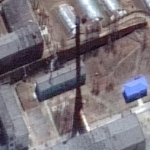
At the Yongyon Radiochemistry Laboratory, steam (or smoke) rising from any of the stacks within the radiochemistry laboratory itself is not often observed in commercial satellite imagery. However, the March 30 image shows a plume of steam or smoke emanating from a small support building in the center of the facility. This, while not an indicator of a reprocessing campaign itself, indicates that the building is occupied and being heated.
March 26, 2021, by Joseph S. Bermudez Jr., Victor Cha and Dana Kim—
Commercial satellite imagery collected during the past eight months indicates that despite the absence of any nuclear testing by North Korea since 2017, the Pyongsan Uranium Concentrate Plant remains operational, is producing uranium concentrate (U3O8, “yellowcake”), and continues to be updated. Yellowcake can be enriched to become highly enriched uranium (HEU), which can be used to produce nuclear weapons.
March 25, 2021, by Victor Cha—
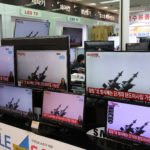
“It’s business as usual” as North Korea appears to be resuming its cycle of provocations, using weapons demonstrations to build leverage and as a pressure tactic to force unilateral concessions from the United States for a return to the negotiating table.
March 19, 2021, by Joseph S. Bermudez Jr. and Victor Cha—
Minor activity is observed near the static test stand and the nearby Sinpo Shipyard’s graving dock in satellite imagery acquired on acquired on March 11, 2021. There are no indications of preparations of a forthcoming “pop-up” test of a submarine launched ballistic missiles (SLBM); however, the North could launch the new SSB or conduct additional SLBM tests at any time of its choosing.
March 17, 2021, by Joseph S. Bermudez Jr., Victor Cha, Marie DuMond, Jonathan E. Hillman and Maesea McCalpin—
Although significant political barriers remain to reconnecting the Korean peninsula, there is merit in substantive study of the types of energy infrastructure connections that would best promote regional growth and stability. The cases examined in this report underscore North Korea’s dire need for energy infrastructure investment and the importance of it meeting the G20 quality infrastructure investment principles.
February 18, 2021, by Joseph S. Bermudez Jr., Victor Cha and Jennifer Jun—
Commercial satellite imagery acquired on January 5, 2021 and February 7, 2021 indicate that the Yusang-ni missile base is operational and that minor development (i.e., construction, etc.) has continued since our last report from May 9, 2019... Commercial satellite imagery acquired on January 5, 2021 and February 7, 2021 indicate that the…
February 17, 2021—
Dr. Victor Cha and Andrew Schwartz are joined by Dr. J. Stephen Morrison of CSIS and Dr. Kee Park of Harvard Medical School to talk about Covid-19 in North Korea. They discussed what we know and don't know about the lockdown and the severity of the health situation there, and what to expect moving forward with how the Biden administration and the international community will deal with the pandemic in North Korea.
February 12, 2021, by Robert King—
The United States’ re-entry into the United Nations Human Rights Council signals a much-needed U.S. commitment to protecting human rights everywhere and gives credibility to a key force fighting North Korea’s human rights violations, says Ambassador Robert King.