August 25, 2017—
Kong Xuanyou is China’s new Special Representative for Korean Peninsula Affairs. He replaces the retiring Wu Dawei, who had held the position since its creation in 2010 and led the Chinese delegation to the Six-Party Talks since August 2004. Kong is an experienced diplomat having worked in the Ministry of Foreign Affairs of China for 32 years.
August 9, 2017—
The objective of the Six Party Talks was to resolve the North Korean nuclear problem through multilateral negotiations. In this Living History interview, Ambassador Chun Yung-woo reflects upon his experience negotiating with the Americans, Chinese and North Koreans during the Six Party Talks and also discusses his later role as National Security Advisor to ROK President Lee Myung-bak.
July 19, 2017—
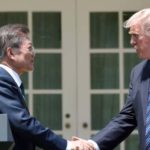
On June 30, 2017, His Excellency Moon Jae-in, President of the Republic of Korea, delivered a Global Leaders Forum address to a Washington D.C. foreign policy audience of more than 250 at CSIS headquarters. This occasion marked several firsts: President Moon's first foreign policy address abroad, his first visit to the United States as president, and his first summit meeting with the Donald J. Trump administration.
July 14, 2017, by Joseph Kim—
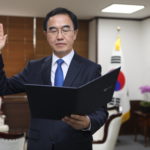
Cho Myung-gyon is South Korea’s new Minister of Unification. He was nominated by President Moon Jae-in on June 13 and took office on July 3, 2017. .. Cho Myung-gyon took office as South Korea’s 39th Minister of Unification on July 3, 2017.…
July 12, 2017, by Robert King—
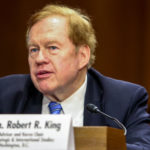
One of the most important recent steps forward was the creation of the United Nations Commission of Inquiry on DPRK human rights violations and its ground-breaking report which was issued in 2014. That report concluded that the DPRK regime systematically violated the human rights of its own people—including freedom of thought, expression and religion; freedom from discrimination; freedom of movement and residence; and the right to food.
June 26, 2017, by Robert King—
The tragic death of Otto Warmbier has again raised the question of whether travel to North Korea ought to be prohibited by the United States government. Prohibiting travel by Americans to North Korea has been talked about for some time, primarily on Capitol Hill. Arguments for a travel ban are (1) to protect the safety and wellbeing of American citizens; and (2) travel is a source of hard currency for the Kim regime which goes to the “royal economy” for imported French cognac and luxury automobiles for the young leader, as well as to fund nuclear weapons and ballistic missiles.
April 3, 2017—
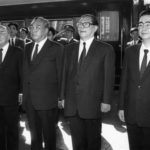
To examine the closeness of the China-North Korea relationship, Beyond Parallel created an original dataset of all high-level visits between the two countries from 1953 to the present... To examine the closeness of the China-North Korea relationship, Beyond Parallel created an original dataset…
March 8, 2017—
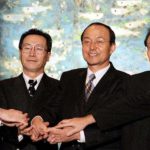
Ambassador Christopher Hill reflects on his personal experience as Assistant Secretary of State for East Asian and Pacific Affairs and head of the U.S. delegation to the Six Party Talks from 2005 to 2009... In 2003, the Six Party Talks were launched to seek a peaceful resolution to the…
February 8, 2017, by Victor Cha—
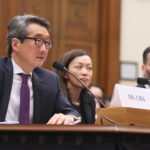
A Testimony by Victor Cha before the U.S. House of Representatives Foreign Affairs Committee on February 7, 2017... A Testimony by Dr. Victor Cha before the U.S. House of Representatives Foreign Affairs Committee on February 7, 2017. Chairman Royce, Ranking Member Representative Engel and distinguished Members of the Committee, it is a distinct…
January 10, 2017—
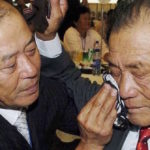
The division of the Korean peninsula continues to incur definitive political, social, and economic costs. The human costs of division, however, are often forgotten. .. The division of the Korean peninsula continues to incur definitive political, social, and economic costs.…