July 18, 2017, by Evan Ramstad—
South Korea’s New President, in Trying to Develop Economic Policy, is Caught up in Geopolitics. South Korea’s new president, Moon Jae-in, in his first two months in office is trying to ease the country’s relations with North Korea just as liberal predecessors, Kim Dae-jung and Roh Moo-hyun, sought to do. Moon opened the door to negotiations and even a summit with the North’s Kim Jong Un, but he has also spoken critically of the North’s missile tests and, with a missile firing and flyovers conducted with the U.S., flexed the South’s military muscles. Moon’s economic strategy is unfolding in a similar manner, with ideas that are like those of the progressive leaders past and some tactics that show he recognizes when difficult choices are needed.
July 14, 2017, by Joseph Kim—
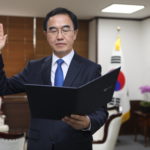
Cho Myung-gyon is South Korea’s new Minister of Unification. He was nominated by President Moon Jae-in on June 13 and took office on July 3, 2017. .. Cho Myung-gyon took office as South Korea’s 39th Minister of Unification on July 3, 2017.…
July 12, 2017, by Robert King—
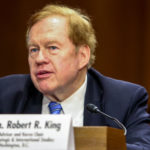
One of the most important recent steps forward was the creation of the United Nations Commission of Inquiry on DPRK human rights violations and its ground-breaking report which was issued in 2014. That report concluded that the DPRK regime systematically violated the human rights of its own people—including freedom of thought, expression and religion; freedom from discrimination; freedom of movement and residence; and the right to food.
July 4, 2017—
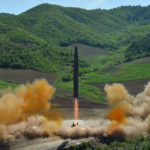
North Korea launched a land-based, intermediate range ballistic missile from North Pyongan province that flew for 37 minutes and 933 km (580 miles) in the morning of July 4. CSIS Beyond Parallel data analytics finds a two-week provocation window under Kim Jong-un after U.S.-ROK summits. We should expect more provocations to come.
June 26, 2017—
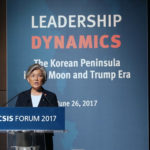
The ROK-U.S. Alliance has safeguarded peace and prosperity on the Korean Peninsula and beyond. And today, our alliance covers a whole range of areas including security, economic, social and cultural dimensions. Geographically, the alliance extends beyond the Korean Peninsula, and is now going global.
June 26, 2017, by Robert King—
The tragic death of Otto Warmbier has again raised the question of whether travel to North Korea ought to be prohibited by the United States government. Prohibiting travel by Americans to North Korea has been talked about for some time, primarily on Capitol Hill. Arguments for a travel ban are (1) to protect the safety and wellbeing of American citizens; and (2) travel is a source of hard currency for the Kim regime which goes to the “royal economy” for imported French cognac and luxury automobiles for the young leader, as well as to fund nuclear weapons and ballistic missiles.
May 12, 2017, by Marie DuMond—
A Predata-CSIS Beyond Parallel May 12 prediction indicates there is a 69% likelihood of North Korean weapons of mass destruction (WMD) activity taking place in the next 14 days. In the next 30 days, there is an 85% chance for North Korean WMD activity. Beyond Parallel defines WMD activity as nuclear tests and missile launches.
May 10, 2017, by Victor Cha and Lisa Collins—
Exit polls from the May 9th election in South Korea indicate that Moon Jae-in will be the country’s next president. Moon will enter office after more than six months of domestic political turmoil following the impeachment of former South Korean president Park Geun-hye. Under these circumstances, Moon is likely to face a series of domestic and foreign policy challenges early in his presidential term.
May 5, 2017, by Gordon LaForge—
On May 9, South Koreans go to the polls in a snap presidential election. Predata signals show that with the vote approaching, online conversations about the economy are louder than those about national security. The latest public opinion surveys found Moon held a commanding lead. But a polling blackout took effect on May 3, leaving observers to wonder how public sentiment may shift in the crucial week before balloting.
April 18, 2017, by Victor Cha—
To study the relationship between North Korean provocations and South Korean elections, Beyond Parallel created a new database of events incorporating both presidential and national assembly elections from the Republic of Korea (ROK) over the last six decades.