October 18, 2017, by Marie DuMond—
Domestic stabilization is the most critical issue with unification for South Korean officials and experts, registering the highest composite score (i.e., high level of concern and low level of knowledge). This means civil-military relations, law and order, and stability in the North represent the issues for which Koreans see great consequences for national interests, but for which they have little prior knowledge or understanding. Hence, it is the greatest potential “blind spot” of unification. Costs related to unification rank a close second for South Koreans, followed by refugees, nuclear weapons, and human rights.
October 2, 2017—
Negotiations over North Korea’s nuclear program have occurred for more than 25 years. This database explores the entire record of nuclear diplomacy between North Korea and the United States from 1990 to 2017... Negotiations over North Korea’s nuclear program have occurred for more than 25 years. There are…
October 2, 2017—
The debate over how to deal with North Korea’s nuclear program has been raging for nearly 25 years. In this study, CSIS Beyond Parallel collected information on negotiations between the U.S. and North Korea to shed light on the present nuclear dilemma.
September 22, 2017, by Marie DuMond—
Predata-Beyond Parallel signals indicate there is a significantly elevated chance of North Korea conducting a missile test in the next 30-days and an elevated likelihood of North Korea conducting a missile test in the next 14-days... [footer] Elevated chance of a North Korean missile test in the next 14 days.…
September 7, 2017, by Marie DuMond—
On September 7, predictive signals by Predata/CSIS Beyond Parallel indicate there is a significantly elevated chance of a North Korean missile test in the next 14 days. The underlying signal has been breaching its highest levels each day since August 31, reaching its highest level in 102 days on September 5 and exceeding its 30-day trailing average by 2.5 standard deviations. The signal continued to show significant overnight increases through September 6.
September 6, 2017—
North Korea conducted its sixth nuclear test on September 3, 2017. North Korean state media announced that the test was of a hydrogen bomb that could fit on the top of an intercontinental ballistic missile (ICBM)... On September 3, North Korea conducted its sixth nuclear test. North Korean state media announced…
August 25, 2017—
Kong Xuanyou is China’s new Special Representative for Korean Peninsula Affairs. He replaces the retiring Wu Dawei, who had held the position since its creation in 2010 and led the Chinese delegation to the Six-Party Talks since August 2004. Kong is an experienced diplomat having worked in the Ministry of Foreign Affairs of China for 32 years.
August 9, 2017—
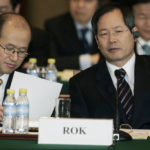
The objective of the Six Party Talks was to resolve the North Korean nuclear problem through multilateral negotiations. In this Living History interview, Ambassador Chun Yung-woo reflects upon his experience negotiating with the Americans, Chinese and North Koreans during the Six Party Talks and also discusses his later role as National Security Advisor to ROK President Lee Myung-bak.
July 24, 2017, by Marie DuMond—
A View Inside North Korea: 35 of 36 North Koreans currently living inside North Korea said at least 75% of their household income came from the markets and not from their official government sanctioned jobs. As featured on The Washington Post... As featured in The Washington Post "Markets helping North Koreans become more independent of the…
July 19, 2017—
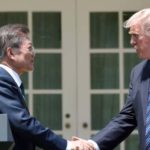
On June 30, 2017, His Excellency Moon Jae-in, President of the Republic of Korea, delivered a Global Leaders Forum address to a Washington D.C. foreign policy audience of more than 250 at CSIS headquarters. This occasion marked several firsts: President Moon's first foreign policy address abroad, his first visit to the United States as president, and his first summit meeting with the Donald J. Trump administration.