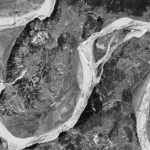
March 30, 2021, by Joseph S. Bermudez Jr. and Victor Cha—
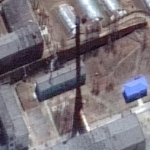
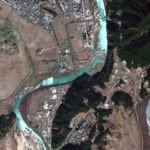
At the Yongyon Radiochemistry Laboratory, steam (or smoke) rising from any of the stacks within the radiochemistry laboratory itself is not often observed in commercial satellite imagery. However, the March 30 image shows a plume of steam or smoke emanating from a small support building in the center of the facility. This, while not an indicator of a reprocessing campaign itself, indicates that the building is occupied and being heated.
March 11, 2020, by Joseph S. Bermudez Jr.—
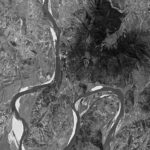
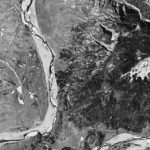
Declassified April 1972 satellite imagery the Yongbyon Nuclear Research Center show developments which taken as a whole continue to represent both an ongoing first-phase construction project for the facility and early infrastructure development efforts within a longer-term plan for future expansion. This work laid the foundations for the construction of the facility’s first waste storage facility in the years to follow and the massive second phase expansion that would begin during the early-1980s.
February 14, 2020, by Joseph S. Bermudez Jr. and Victor Cha—
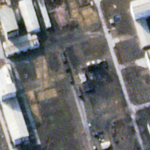
Satellite imagery acquired on February 14, 2020 shows that the three specialized railcars identified in Beyond Parallel’s report from February 11, 2020 have been moved from west of the Radiochemistry Laboratory to the southern rail yard adjacent to the reported isotope/tritium production facility.
A fourth railcar is present in the latest imagery in addition to the three railcars that were captured in imagery from February 10, 2020.
These railcars have been associated with the movement of radioactive material in the past.
If past practice is any indication, all four cars will leave the Yongbyon facility sometime during the next seven days.
February 11, 2020, by Joseph S. Bermudez Jr. and Victor Cha—
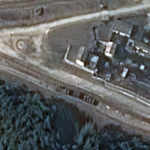
Satellite imagery acquired on February 10, 2020 shows the presence of three specialized railcars that have been associated with the movement of radioactive material in the past. The last observed presence of these railcars by Beyond Parallel was in November 2019.
The size and number of the casks observed on the railcars suggest the outbound shipment of irradiated liquid or solid waste, disassembled but contaminated equipment or, potentially, the movement of fissile materials. A less likely alternative is the inbound shipment of radioactive material.
November 14, 2019, by Joseph S. Bermudez Jr., Victor Cha and Dana Kim—
Recent satellite imagery from November 2019 shows the presence of four specialized railcars that have been associated with the movement of radioactive material in the past. The last observed movement of these railcars by Beyond Parallel was in April 2019. It is unclear whether the railcars are being used for the outbound shipment of irradiated liquid or solid waste, disassembled but contaminated equipment or the movement of fissile material to facilities outside the Yongbyon area. A less likely alternative is the inbound shipment of radioactive material from a facility outside the Yongbyon area.
October 22, 2019, by Joseph S. Bermudez Jr.—
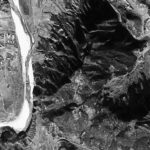
Collected 14 months after the image provided in Part 5 (November 21, 1968) this March 17, 1970 KH-4B image of the Yongbyon Nuclear Research Center shows continued expansion within the village of Sang-dong, minor improvements in the operations, administration/laboratory and support areas, slowly continuing construction of the bridge across the Kuryong-gang and minor infrastructure improvements in the Pungang-ni area. Taken as a whole, these developments continue to indicate an ongoing first-phase construction project for the facility and very early infrastructure development efforts within a longer-term plan for future expansion.
September 25, 2019, by Joseph S. Bermudez Jr.—
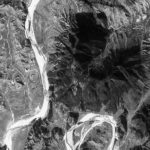
Collected eleven months after the image provided in Part 4 (December 10, 1967) this November 21, 1968 KH-4B image of the Yongbyon Nuclear Research Center does not show any significant developments in the operations (with the IRT-2000 research reactor), support or administrative/laboratory areas. It does, however, show continuing development within the village of Sang-dong and the early stages of construction for a new road bridge across the Kuryong-gang in the Pungang-ni area that will connect the support area to the opposite side of the river. Taken as a whole, these developments represent both continuation of a first-phase construction project for the facility and the earliest infrastructure development stages within a longer-term plan for future expansion.
July 18, 2019, by Joseph S. Bermudez Jr.—
Acquired almost two years after the image provided in Yongbyon Declassified Part III (February 11, 1966), this December 10, 1967 image of the Yongbyon Nuclear Research Center is one of the first acquired by the improved reconnaissance KH-4B. Among other improvements, the resolution of the newer KH-4B was 1.8 meters versus 2.7 meters of the earlier KH-4A allowing for considerably better image quality.
June 20, 2019, by Joseph S. Bermudez Jr.—
Acquired seven months after the image provided in Yongbyon Declassified Part II (August 23, 1965) this 2.7-meter resolution image covers the Yongbyon area on February 11, 1966. While the general area remains primarily engaged in agricultural activity typical of rural North Korea during the 1960s, significant construction activity is observed at the nascent Yongbyon Nuclear Research Center and adjacent village of Sang-dong.
April 18, 2019, by Joseph S. Bermudez Jr. and Victor Cha—
April 15 railcar movement observed in Airbus satellite imagery at North Korea's Yongbyon facility provides no further understanding concerning the presence of these specialized railcars other that their probable use for the movement of radioactive material.