August 19, 2026, by Victor Cha—
There’s real logic beneath Trump’s split nuclear strategy. Iran and North Korea present very different nonproliferation problems.
.. One thing that’s consistent about U.S. nuclear nonproliferation policy is its inconsistency. After the denuclearization of Libya, the U.S. government embraced a view that all...
August 17, 2026, by Victor Cha—
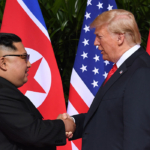
Why would North Korea's leader be interested in more summits with Trump? If Kim Jong-un is a revisionist in his outlook, he would look to capitalize on any available opportunity to advance the core goal of cementing his status as a nuclear weapons state, argues Victor Cha.
April 21, 2026, by Victor Cha—
Dr. Victor Cha argues it's time to stop pretending the old framework can work and instead build a "cold peace" — a relationship short of normalization that manages the North Korean threat as it actually is... This was published on Foreign Affairs today, read the full piece here. In the early 1990s,…
September 10, 2021, by Robert King—
Despite statements from Secretary of State Antony Blinken that a North Korean human rights envoy will be appointed, there are several complications that could delay that appointment... In June 2018, the United States Congress adopted legislation extending (“reauthorizing”) the North Korea Human…
March 25, 2021, by Victor Cha—
“It’s business as usual” as North Korea appears to be resuming its cycle of provocations, using weapons demonstrations to build leverage and as a pressure tactic to force unilateral concessions from the United States for a return to the negotiating table.
February 18, 2021, by Joseph S. Bermudez Jr., Victor Cha and Jennifer Jun—
Commercial satellite imagery acquired on January 5, 2021 and February 7, 2021 indicate that the Yusang-ni missile base is operational and that minor development (i.e., construction, etc.) has continued since our last report from May 9, 2019... Commercial satellite imagery acquired on January 5, 2021 and February 7, 2021 indicate that the…
February 12, 2021, by Robert King—
The United States’ re-entry into the United Nations Human Rights Council signals a much-needed U.S. commitment to protecting human rights everywhere and gives credibility to a key force fighting North Korea’s human rights violations, says Ambassador Robert King.
December 15, 2020, by Robert King—
The incoming Biden administration is now just weeks away from assuming the reins of political power in Washington. The new administration has no shortage of gratuitous advice about policies and programs it ought to pursue. Unrequested, I am offering my advice about what ought to be on the agenda for dealing with North Korean human rights in the new administration. One issue that has largely been ignored for the last two and a half years of President Trump’s White House stewardship is human rights in North Korea. In light of that neglect, I offer thoughts on the North Korea human rights agenda for the new administration.
November 30, 2020, by Michelle Bigold, Minjung Chey and Duke Dukho Gim—
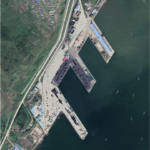
Rajin holds considerable economic value, and its viability stems from its potential to act as a regional logistics hub linking the Chinese northeastern provinces, Far East Russia and North Korea. For China, the development of the northeastern provinces of Heilongjiang and Jilin hinges on access to a seaport. Having long suffered from stagnated growth and brain drain, the region is further weighed down by inefficient transport options that continue to stymie its economic potential.
September 23, 2020, by Victor Cha—
Over the course of 30 elections since 1956, Beyond Parallel measured the period of time before or after an election in which a North Korean provocation happens and found the provocation window has grown more narrow over time. That is, North Korean missile/nuclear tests and other major kinetic provocations have clustered increasingly closer to U.S. elections.