June 8, 2018, by Victor Cha and Marie DuMond—
With the Singapore Summit between Donald Trump and Kim Jong-un on June 12, there is bound to be references made by the North Korean leader to the need to end U.S. “hostile policy” as a precondition for denuclearization. However, CSIS Beyond Parallel research shows that North Korean citizens do not hold uniformly negative impressions of the United States, contrary to the statements of North Korean leaders. A study commissioned by Beyond Parallel of North Koreans currently living inside the country found 68% North Korean respondents do not see the United States as North Korea's enemy.
June 7, 2018—
The world’s top Korea watchers, Victor Cha, Sue Mi Terry, and Mike Green, discuss the upcoming June 12 Summit in Singapore, what Kim Jong Un has already gotten out of the meeting with Donald Trump, the maddening nature of negotiations with North Korea, and potential summit outcomes.
June 5, 2018, by Robert King—
There are a number of areas where we can make cautious non-threatening steps forward on human rights, and this is the time to do it... Only a week remains before the planned meeting in Singapore between U.S. President Donald Trump and North Korean leader Kim Jong-un. A good deal has...
May 30, 2018—
Sue Mi Terry, a former senior CIA analyst and National Security Council staff member during the George W. Bush and Barack Obama administrations talks about efforts this week by the administration to revive the peace summit between President Trump and North Korean leader Kim Jong Un.
May 25, 2018—
Victor Cha, a top Korea expert who was an Asia director in the National Security Council during the George W. Bush administration and deputy head of the U.S. delegation at the Six-Party Talks in Beijing, talks about President Trump’s letter to North Korean leader Kim Jong Un canceling the June 12 summit in Singapore and where bilateral talks might go from here.
May 22, 2018, by Joseph S. Bermudez Jr., Victor Cha and Marie DuMond—
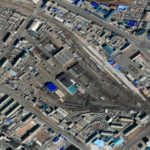
Chongjin Railway Factory is one of three major railway manufacturing facilities in North Korea's eastern corridor. Analysis of this facility can be a brick-and-mortar sign-post of foundational infrastructure progress if the trust-building project of reconnecting the Koreas' railways is carried out.
May 21, 2018, by Seong-whun Cheon—
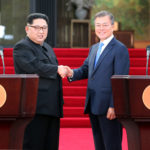
The absence of specifics on the nuclear issue in the Panmunjeom Declaration means that the inter-Korean summit has passed the nuclear buck on to the U.S.-DPRK summit. In particular, by introducing measures for promoting bilateral relations that are contingent on satisfactorily addressing the nuclear issue, the Panmunjom Declaration makes settling the nuclear issue a precondition for improving inter-Korean relations.
May 21, 2018, by Victor Cha and Lisa Collins—
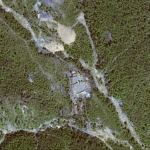
Newly acquired satellite imagery from May 19, 2018 shows that preparations for the shutdown of the North Korean nuclear test site at Punggye-ri appear to be underway, and that a number of facilities have been shuttered. .. Newly acquired satellite imagery by Beyond Parallel on May 19, 2018 shows that preparations for…
May 16, 2018, by Robert King—
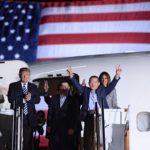
The recent return of three detainees from North Korea and the way in which they were welcomed back from Pyongyang, has a number of unique features that suggest significant changes by the Trump Administration from procedures that have been followed by previous administration over the previous decade. Releasing American citizens, who were detained for spurious reasons in the first place, might better be handled with less fanfare to discourage attempts to exploit future incidents.
May 14, 2018, by Joseph S. Bermudez Jr. and Beyond Parallel—
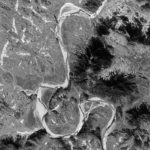
The exact origins of North Korea’s nuclear program are still shrouded in mystery despite being the object of study for over twenty-five years. Contrary to common perception, early satellite imagery from the Central Intelligence Agency, taken on December 15, 1962 and June 27, 1963, shows that construction on the Yongbyon Nuclear Research Center in North Korea started sometime after June 27, 1963 and before July 16, 1964.