August 22, 2019, by Victor Cha—
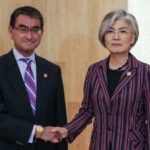
The South Korean government announcement of its intention not to renew the General Security of Military Information Agreement (GSOMIA) represents escalation of the Japan-Korea dispute after each side removed the other from preferential trading arrangements (so-called "whitelists").
August 21, 2019, by Joseph S. Bermudez Jr. and Victor Cha—
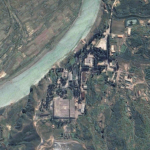
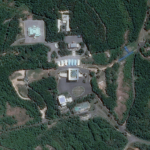
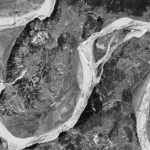
The Pakchon Uranium Concentrate Pilot Plant is one of only two declared and known uranium concentrate plants in North Korea (Pyongsan Uranium Concentrate Plant at Pyongsan is the other). This facility was used for Yellowcake production at least through the mid-1990s, and therefore would require inspection under any new U.S.-DPRK denuclearization declaration and agreement as it has not been subject to international inspection for over 25 years since IAEA visits to the site as part of the Full Scope Safeguards Agreement process in 1992.
August 16, 2019, by Joseph S. Bermudez Jr. and Victor Cha—
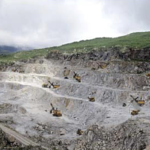
Ryongyang Mine is the largest magnesite mine in North Korea and one of the largest in the world. However, satellite and ground imagery show the infrastructure and technology in use at the mines is dated and obsolete when compared to world standards.
August 2, 2019, by Victor Cha and Dana Kim—
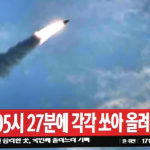
Three projectile launches, all within the past eight days, demonstrate North Korea’s intention to perfect its short-range strike capabilities, guidance systems, and solid fuel development... North Korea conducted three separate tests that launched two projectiles each on July 25 (KN-23…
July 22, 2019, by Joseph S. Bermudez Jr. and Victor Cha—
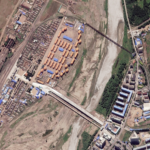
Satellite imagery shows that the new Namyang-Tumen road bridge connecting North Hamgyong province in North Korea with China is nearing completion and could be open to traffic as early as the end of 2019... Satellite imagery shows that the new Namyang-Tumen road bridge connecting North Hamgyong province in North…
July 19, 2019, by Robert King—
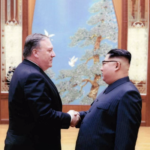
At a press conference last week, Secretary of State Mike Pompeo announced the creation of a Commission on Unalienable Rights. He explained its purpose: “The commission is composed of human rights experts, philosophers, and activists, Republicans, Democrats, and Independents of varied background and beliefs, who will provide me with advice on human rights grounded in our nation’s founding principles and the principles of the 1948 Universal Declaration of Human Rights.”
The membership of the commission is a distinguished and diverse group of individuals, but the responsibility assigned to the commission seems to raise questions.
July 18, 2019, by Joseph S. Bermudez Jr.—
Acquired almost two years after the image provided in Yongbyon Declassified Part III (February 11, 1966), this December 10, 1967 image of the Yongbyon Nuclear Research Center is one of the first acquired by the improved reconnaissance KH-4B. Among other improvements, the resolution of the newer KH-4B was 1.8 meters versus 2.7 meters of the earlier KH-4A allowing for considerably better image quality.
July 2, 2019, by Victor Cha and Joseph S. Bermudez Jr.—
As the first sitting president in U.S. history to step into North Korea, Donald Trump’s action could be seen as a significant representation of the U.S. intention eventually to conclude a peace treaty... As the first sitting president in U.S. history to step into North Korea, Donald Trump’s…
June 24, 2019—
In this episode, Andrew and CSIS’s Victor Cha welcome Anna Fifield, Beijing Bureau Chief of the Washington Post. Fifield is the author of the recent biography, The Great Successor: The Divinely Perfect Destiny of Brilliant Comrade Kim Jong Un. They discuss the challenges of reporting on a reclusive state, the recent Trump-Xi summit, and the future of the relationship between the U.S. and North Korea. (Recorded from remote locations on Friday, June 21, 2019.)
June 20, 2019, by Joseph S. Bermudez Jr.—
Acquired seven months after the image provided in Yongbyon Declassified Part II (August 23, 1965) this 2.7-meter resolution image covers the Yongbyon area on February 11, 1966. While the general area remains primarily engaged in agricultural activity typical of rural North Korea during the 1960s, significant construction activity is observed at the nascent Yongbyon Nuclear Research Center and adjacent village of Sang-dong.